
Table of Contents
Many men overlook the importance of their reproductive health until it becomes a matter of concern while conceiving, and they usually fail to recognise the early warning signs that develop months or years before. By that point, what began as a subtle symptom may have developed into a more complex challenge requiring intensive intervention.
When there is a fertility issue, your reproductive system communicates through specific signals such as sexual dysfunction, physical pain, or shifts in hormonal balance. By recognising these warning signs early, one can intervene and take timely action. Whether you are planning to have a child or just taking good care of your health, understanding what to watch out for will help you act in time.
Let’s look at this guide to the key symptoms of male fertility problems.
Understanding how male fertility works
Every day, a male body produces millions of sperm cells, a process that takes approximately 74 days. Each stage of development has strict conditions, i.e. the right temperature, the balance of hormones, and protection from harmful exposures. It is the reason the testes are outside the body: sperm production requires a temperature nearly 2 degrees lower than body temperature. Even slight temperature changes damage the developing cells.
Beyond temperature, hormone balance is equally important for this production process. Testosterone supports sperm creation while FSH and LH regulate the development process itself.
Once this hormonal balance is disrupted by illness, medication, or lifestyle issues, fertility problems for males begin developing immediately; however, they may not actually be noticeable for months.
Sexual function changes indicate fertility problems
Sexual function and fertility are deeply intertwined, and any change in sexual performance is the first noticeable sign that your reproductive system needs attention.
- Reduced desire and performance
A drop in sexual desire isn’t always stress or relationship problems. The same testosterone that fuels your interest in sexual activity also drives sperm production, so when your libido decreases, your fertility often suffers too. Because this happens slowly over time, most men ignore it instead of recognising it as a treatable condition.
Erectile difficulties share this same hormonal connection. Getting and maintaining an erection requires good blood flow, and your testes need that same healthy circulation to produce quality sperm.
- Changes in ejaculation
The noticeable decrease in semen volume or changes in colour and consistency are also male fertility problems that can indicate blockages or gland problems.
These common male fertility problems are treatable once detected in the early stages.
Physical warning signs of male fertility problems
Your reproductive organs show physical distress of fertility problems through pain, swelling, and detectable abnormalities, which require medical attention. Those are:
- Testicular Pain or Swelling
If testicular pain lasts more than a day, get it checked out, even if it doesn’t seem serious. A dull, ongoing ache often points to varicoceles, in which veins in your scrotum become enlarged, raising the temperature around your testes and damaging sperm production. Another warning sign is swelling that needs the same attention, whether it’s caused by fluid buildup, an infection, or a structural issue.
- Lumps or Abnormalities
Any new lumps, areas that feel harder than usual, or changes in size are signs of male fertility problems that need a doctor’s evaluation.
Hormonal symptoms affecting male fertility
Your hormones control fertility, and also affect your weight, energy, mood, and physical appearance. When they fall out of balance, you will usually notice the effects before you can see the signs of male fertility problems.
- Gaining weight around the stomach despite no major changes in diet or exercise is a sign of declining testosterone levels, which directly affect sperm production.
- If you notice developing breast tissue, it signals that oestrogen levels are increasing relative to testosterone, creating an imbalance that affects fertility.
- Watch for other changes too; thinning body and facial hair, feeling constantly tired even when you are sleeping enough, and experiencing mood swings or constant low mood.
Together, these symptoms point to a fertility problem in male hormone function that affects how you feel generally and your ability to conceive.
Lifestyle impact and when to seek help
The choices you make every day have a real impact on your fertility, though the effects show up gradually over time.
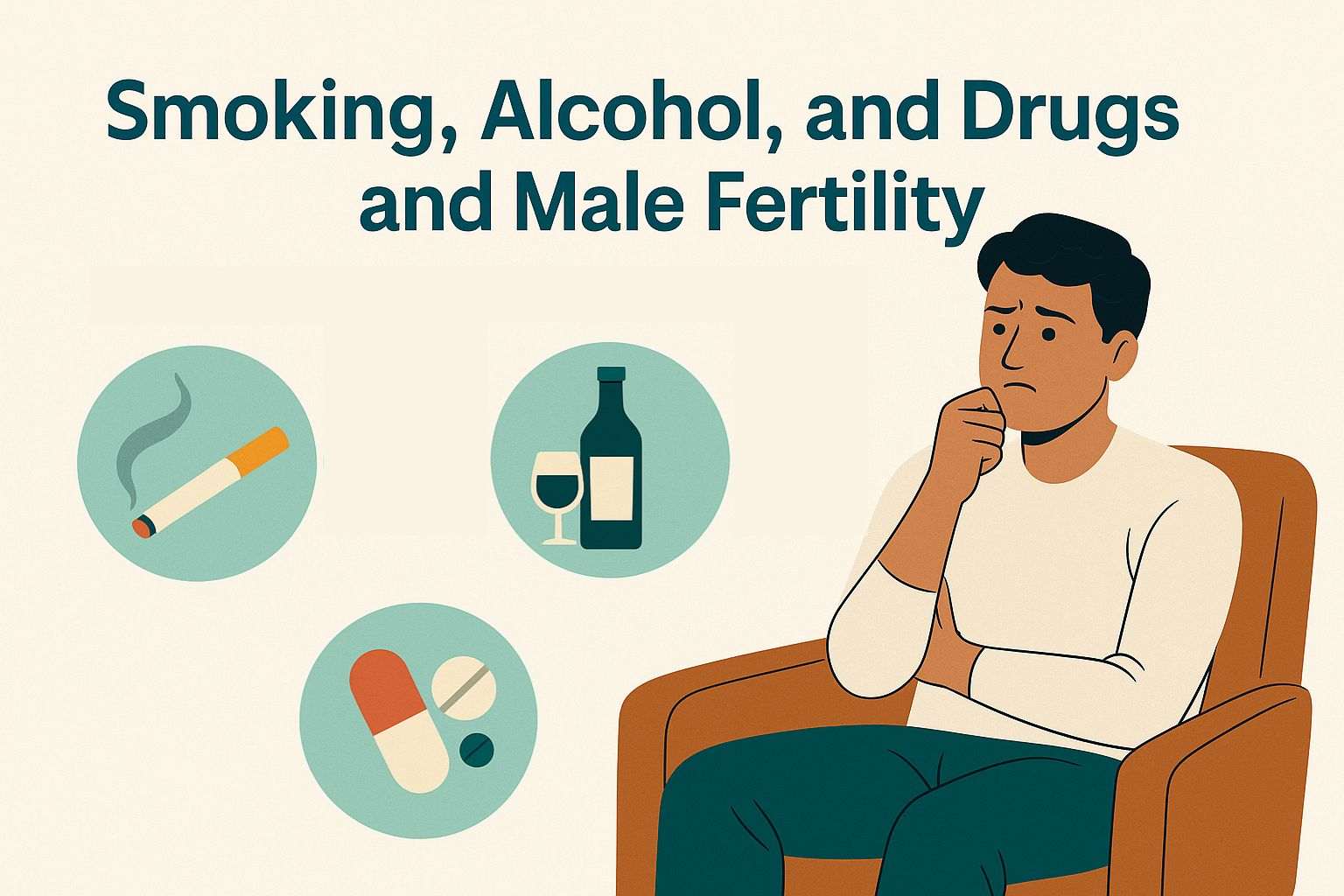
- Smoking harms sperm DNA and reduces both the number of sperm you produce and how well they move.
- Heavy drinking disrupts the balance of hormones and affects how your liver processes them.
- Excess weight increases oestrogen production and raises the temperature around your testes.
- Chronic stress elevates cortisol levels, which lowers testosterone during sperm development.
- Environmental exposure to pesticides, certain chemicals, and excessive heat from hot baths or laptops damages developing sperm
If you have been trying to conceive for twelve months, get the fertility testing that starts with semen analysis and blood tests to check hormone levels, giving you clear answers about fertility problems in males.
Conclusion
The warning signs discussed throughout this guide are the means through which your body tries to tell you about the possible fertility issues. Your reproductive health is part of your overall well-being. Therefore, it should be given the same consideration as any other part of your body, regardless of your plans to start a family. Today, several diagnostic tools and treatments are advancing, offering hope and practical solutions to male fertility problems.
If you have noticed any of these signs of male fertility problems, The Male Fertility Clinic will be your biggest support. Our experts provide professional service and personalised treatment plans to support your reproductive health goals. Contact us today!


 Quick WhatsApp Enquiry